Every seven to 10 years, groups of men head out to with axes hand to harvest cork from oak trees. And although the trees are stripped clean, none of them are harmed in the process. In fact, in Portugal, where roughly 50 percent of the world’s cork comes from, it’s illegal to cut down a cork oak prematurely.
Due to its ability to regenerate, cork has proved to be a very sustainable material. And, with Portugal’s leading role in cork production, it makes sense that a Portuguese startup has designed theEcocubo, a small, minimalist, portable home made of cork and wood.

Taking up just about 97 square feet, the Ecocubo is designed to be both environmentally friendly and inconspicuous among its surroundings. The Ecocubo is positioned on stilts for minimal impact to the landscape. A small deck out front lets residents survey their environment.
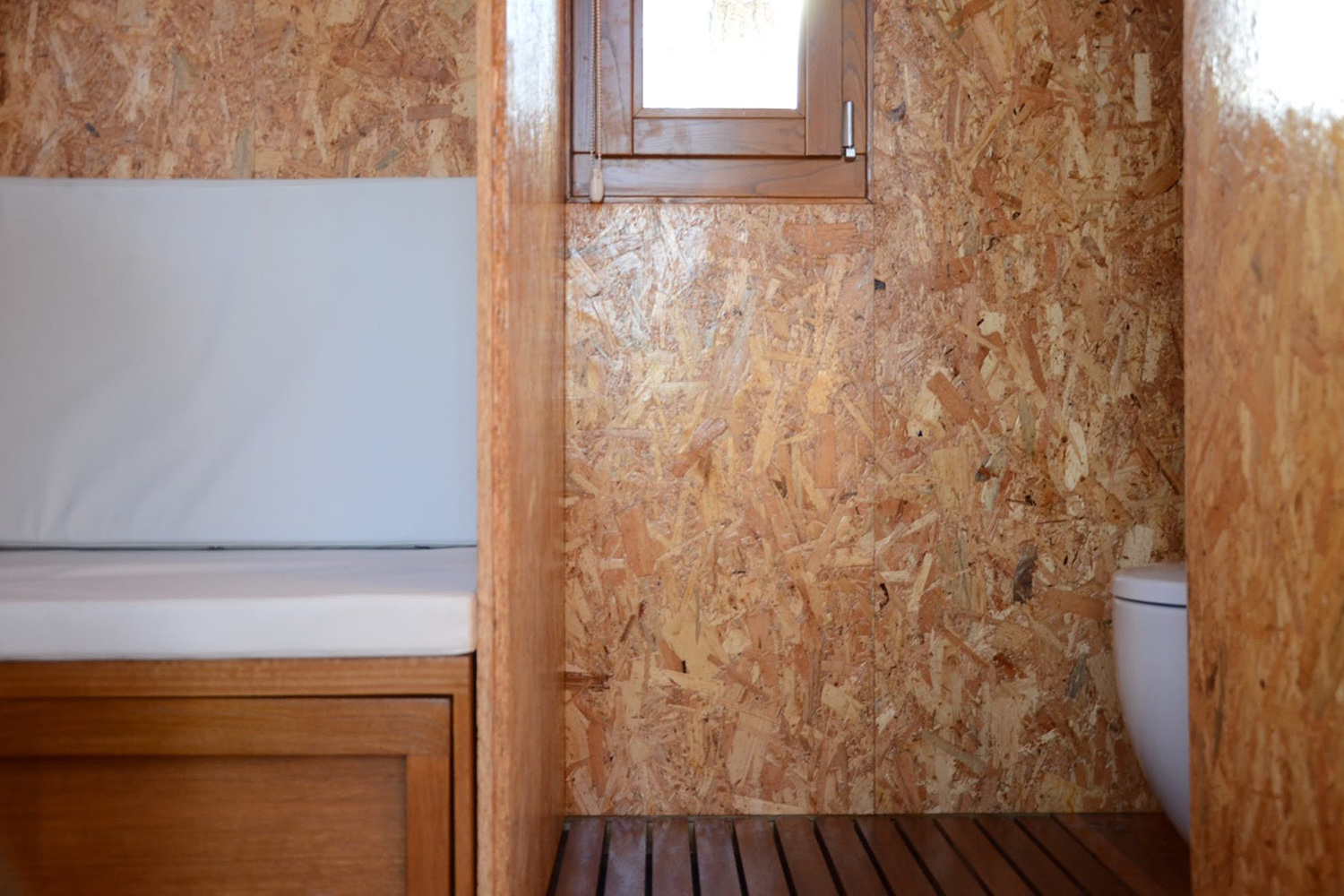
The quarters are tight inside, with one bed that folds into a couch, a kitchenette, a small table, and two stools. It won’t comfortably accommodate more than a few people and, unless you literally live for the outdoors, you probably wouldn’t want to call the Ecocubo your permanent residence. But it makes for a cozy short-term accommodation.

Cork has a number of benefits beyond its sustainability. It’s light, impermeable, and fire retardant. It’s soft to the touch and to the eyes, allowing it to blend well into nature.
It takes about two weeks to construct an Ecocubo and, although not yet available for private sale, the startup behind the homes and its designer — António Fernandes — have plans to sell them internationally for between $11,700 and $17,550,according to New Atlas.

Meanwhile, if cork and the outdoors aren’t your style, tiny houses come in all shapes, sizes, and materials. There’sthe brick house in San Fransiscorenovated from a laundry boiler room orthe cement blocks and clay house in Thailand.